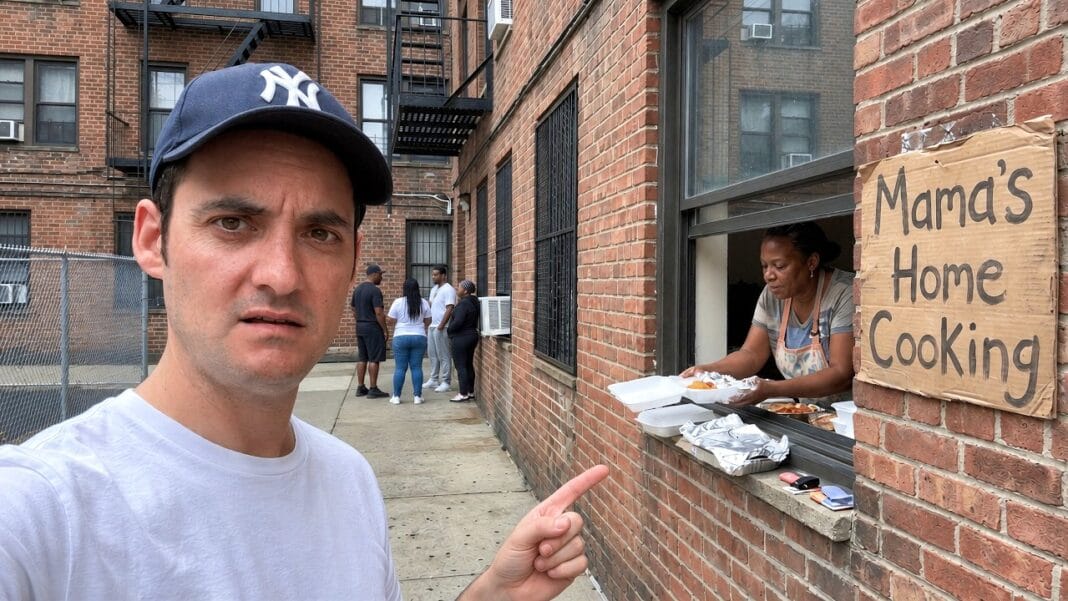

If you watched the video, you’ve seen the heart of it. This guide is the map and the backstory: who built Philadelphia’s Black food tradition, where it lives now, and how to taste it for yourself.
Here’s the thing that surprises most visitors. Black Philadelphians didn’t just join this city’s food story. For long stretches, they wrote it. The city’s first famous street food, its first celebrated catering dynasties, and some of its most beloved sandwiches all trace back to Black cooks and entrepreneurs. Today’s chefs are carrying that line forward, and the results are some of the most exciting meals in America.
Part One: The History on Your Plate
The Pepper Pot Women (1700s-1800s)
Start on a cobblestone street corner. In early Philadelphia, one of the city’s first street foods was pepper pot: a thick, spicy stew made from tripe, ox feet, and other inexpensive cuts, loaded with seasoning and rooted in West African and Caribbean cooking. It was sold hot from cauldrons, largely by Black women, who drew customers with song-like street cries. An 1810 booklet, The Cries of Philadelphia, captured the scene, and the painter John Lewis Krimmel later depicted a Black woman ladling soup to a mixed crowd in the market.
This was more than lunch. Historians note that many of these women earned real incomes and put money back into the churches, charities, and abolitionist organizations that formed the backbone of Black Philadelphia. A bowl of pepper pot was a small business and a path to independence.
The dish later got swallowed by canned-soup marketing and nearly vanished from the city’s memory. But the revival is real. Chefs like Omar Tate (more on him below) have put pepper pot back on the table, and Black chefs gathered in Philadelphia in 2026 for a pepper pot summit to celebrate and update it.
The Caterers Who Fed an Elite (1778-1870s)
The documented record of Black culinary entrepreneurship here goes back at least to 1778, when Caesar Cranshell catered a major event. After him came a remarkable line of professionals:
- Robert Bogle (1774-1848) turned the role of public waiter into a thriving catering business serving Philadelphia’s white elite. He’s remembered for his terrapin soup, and a banker, Nicholas Biddle, even wrote a playful “Ode to Bogle” about him. A historical marker honors him downtown.
- Peter Augustin, a West Indian immigrant (often described as Haitian), took over Bogle’s business around 1818. His chicken croquettes became legendary, and his family’s firm was nicknamed the “Delmonico’s of Philadelphia.” W.E.B. Du Bois wrote that the Augustin establishment made Philadelphia catering famous across the country.
- Thomas J. Dorsey (1812-1875) escaped slavery in Maryland in 1836, and friends in Philadelphia raised money to buy his freedom. He rose to become one of the city’s most successful caterers. Du Bois grouped Dorsey with Henry Minton and Henry Jones as a catering “triumvirate.” Dorsey’s son, William Henry Dorsey, went on to compile 388 scrapbooks documenting 19th-century Black life.
By the end of the 1800s, big hotels and shifting social tastes pushed many of these firms out. But the model they proved, that Black-owned food businesses could be excellent, profitable, and influential, is the foundation for everything below.
Soul Food, Named and Reclaimed
Chef and educator Joy Parham has pointed out that “soul food” began as simply Southern food. The new name caught on as a way for white Southerners to separate the cooking of Black cooks from their own. That history is a reminder that when you eat soul food in Philadelphia, you’re eating the cooking of the Great Migration, family recipes carried north, and a food culture that has always been about more than what’s on the plate.
“Do for Self”: The Nation of Islam’s Food Legacy
Philadelphia’s Black Muslim community shaped the city’s table in ways locals know and visitors often miss. Malcolm X came to Philadelphia in March 1954 to help energize the Nation of Islam’s local Temple No. 12, and the movement’s emphasis on self-reliance and healthier eating produced bakeries, restaurants, bean pies, and a sandwich now beloved citywide: the Muslim fish hoagie. Think fried whiting, melted American cheese, and (in the classic Philadelphia version) raisins, chopped on a griddle the way a cheesesteak would be.
One honest note: the most famous maker, Sister Muhammad’s Kitchen & Bakery in Germantown/Nicetown, was evicted over back rent in September 2022, according to the Philadelphia Inquirer. Its legacy lives on in variations across the city. It’s a good reminder of how fragile these community institutions are, and why supporting them matters.
Part Two: Where to Eat Now
Hours, menus, and ownership change, so check each spot’s website or socials before you go.
The Landmarks and Tasting Menus
Friday Saturday Sunday (261 S. 21st St., near Rittenhouse Square) Owners Chad and Hanna Williams, both Philadelphia natives, bought this long-running restaurant in 2014 and made it their own. It won the James Beard Award for Outstanding Restaurant in 2023 and earned one of the city’s first Michelin stars in 2025. The evolving multi-course tasting menu is the headline, but you can also walk in to The Lovers Bar, a 2026 James Beard Outstanding Bar finalist.
Honeysuckle (631 N. Broad St.) Chefs Omar Tate and Cybille St. Aude-Tate grew Honeysuckle from pop-ups to a West Philadelphia market and café, then to this ambitious North Broad restaurant that opened in April 2025. Each dish tells a story about Black American and diasporic history, and the honors have piled up: a 2026 spot on Bon Appétit’s best new restaurants list, Food & Wine Best New Chefs status, and James Beard recognition. Dinner is a special-occasion splurge, but the team also ran a pay-what-you-can lunch service in fall 2026, a nod to the community-first roots of the project.
Soul Food, BBQ, and Southern Comfort
Booker’s Restaurant & Bar (5021 Baltimore Ave., Cedar Park) Opened in 2017 by Saba Tedla and named for Booker Wright, the Mississippi waiter who spoke candidly about racism on camera in the 1960s. It’s now owned by Cheri and Tracey Syphax. Southern-inflected comfort food, brunch, and cocktails.
Butter’s Soul Food To Go (2730 W. Girard Ave., Brewerytown) Kevin Bell’s charming soul food spot is named for how good the food is: it melts in your mouth. A neighborhood favorite for classics.
Barkley’s BBQ (2017 N. 29th St.) Pit master Tank Barkley serves heaping platters of barbecue and soul food. The restaurant is open Fridays and Saturdays; the food truck roams the region the rest of the week.
BlackHen Fried Chicken (120 Chestnut St., Old City) Fried chicken and cornbread, downtown.
SOUTH Restaurant & Jazz Club (N. Broad St., Spring Garden) The Bynum brothers, Robert and Benjamin, have shaped Philadelphia’s soul food and jazz scene for more than three decades, with places like Zanzibar Blue and Warmdaddy’s in their history. SOUTH pairs Southern cooking with live music and has helped anchor North Broad’s revival.
Kitchen + Kocktails (S. Broad St.) Kevin Kelley’s Southern comfort brand arrived in Philadelphia in 2025 in a 300-seat space billed as the city’s largest Black-owned restaurant.
Corinne’s Place (Haddon Ave., Camden, NJ) Just across the river, Corinne Bradley-Powers, known as Camden’s Queen of Soul Food, has been serving for about three decades. Critic Craig LaBan has called her traditional fried chicken the region’s best.
New Directions and Plant-Powered Plates
Black Dragon Takeout (5260 Rodman St., West Philadelphia) Chef Kurt Evans started planning this spot in 2016 as family-run Chinese takeouts closed across Black neighborhoods. His answer: Black American-infused Chinese takeout so popular that people line up. Look for the giant dragon mural.
The Nile Cafe (Germantown Ave., Germantown) Widely regarded as Philadelphia’s oldest vegan restaurant, known for vegan jerk chicken and stew fish.
All the Way Live (6108 Germantown Ave.) Billed as the city’s first vegan and raw food restaurant.
Sweets, Sips, and Markets
Sweet T’s Bakery (Reading Terminal Market) When Mark and Tia El opened their stall in 2021, it became the first Black-owned bakery in the market’s roughly 130-year history. Sweet potato treats are the specialty.
Two Locals Brewery (University City) Founded by Philadelphia natives Richard and Mengistu Koilor, who began with a homebrew kit in 2016, and described as Pennsylvania’s first Black-owned brewery.
How to Plan Your Black Philadelphia Food Tour
- A history-lover’s day: Start downtown at the Bogle marker, pick up pepper pot or a croquette-inspired dish where you can find one, then head to Reading Terminal Market for Sweet T’s.
- A West Philly evening: Black Dragon for takeout, a drink at Two Locals, then dinner or brunch at Booker’s.
- A splurge weekend: Honeysuckle on North Broad and Friday Saturday Sunday near Rittenhouse, with live music at SOUTH.
- A Germantown afternoon: Vegan plates at The Nile Cafe and All the Way Live along Germantown Avenue.
Why It Matters
Every place on this list is a small act of continuity. The pepper pot women, the caterers, the Muslim bakers and fishmongers, the soul food matriarchs, and today’s James Beard- and Michelin-recognized chefs are one long story. Spending your dinner budget at these tables keeps that story going.
Have a favorite Black-owned spot in Philadelphia we missed? Tell us in the comments or share your own video review on FavoriteEateries.com.
Sources
- Visit Philadelphia, “Black-Owned Restaurants to Try in Philadelphia”: https://www.visitphilly.com/articles/philadelphia/black-owned-restaurants-to-seek-out-in-philadelphia/
- Philadelphia Inquirer, “A guide to Black-owned restaurants in Philadelphia”: https://www.inquirer.com/philly-tips/black-owned-restaurants-philadelphia.html
- Philadelphia.Today, “Where to Eat Soul Food in Philadelphia”: https://philadelphia.today/2026/10/where-to-eat-soul-food-philadelphia/
- Encyclopedia of Greater Philadelphia, “Philadelphia Pepper Pot”: https://philadelphiaencyclopedia.org/essays/philadelphia-pepper-pot/
- WHYY, “‘Pepperpot’ in Philly’s ‘What Now: 2026’ festival”: https://whyy.org/articles/philadelphia-pepperpot-black-women-what-now-festival/
- Philadelphia Inquirer, pepper pot summit (Sept. 2026): https://www.inquirer.com/food/craig-laban/a/pepper-pot-soup-shola-olunloyo-omar-tate-brown-tripe-20260926.html
- BlackPast, “Robert Bogle (1774-1848)”: https://www.blackpast.org/african-american-history/bogle-robert-1744-1848/
- Pennsylvania Eats, “How Philadelphia’s Pioneering Black Caterers Built an Industry”: https://www.paeats.org/?p=137831
- Old Line Plate, Augustin family history: https://oldlineplate.com/page/6/
- Encyclopedia.com, “Dorsey, Thomas J.”: https://encyclopedia.com/african-american-focus/news-wires-white-papers-and-books/dorsey-thomas-j
- Philadelphia Magazine, Joy Parham soul food guide: https://www.phillymag.com/foobooz/soul-food-guide-joy-parham-philadelphia/
- Philadelphia Inquirer, “Muslim fish hoagies”: https://www.inquirer.com/food/muslim-fish-hoagie-sister-muhammad-20230403.html
- Philadelphia Inquirer, Malcolm X and Philadelphia’s Muslim community: https://www.inquirer.com/philly/blogs/jehron_muhammad/Jehron-Muhammad-Muslims-growing-presence-in-Philly.html
- Philadelphia Inquirer, Honeysuckle coverage: https://www.inquirer.com/food/honeysuckle-sao-bon-appetit-best-new-restaurants-2026-20260825.html
- 6abc, Honeysuckle pay-what-you-can lunch: https://6abc.com/post/dish-pay-what-can-lunch-service-honeysuckle-philadelphia/19989657/
- Philadelphia Inquirer, 2026 James Beard results: https://www.inquirer.com/food/james-beard-wins-2026-philadelphia-20260615.html
- MICHELIN Guide, Chad Williams profile: https://guide.michelin.com/en/article/dining-out/chef-chad-williams-philadelphia
- Philadelphia Inquirer, Booker’s: https://www.inquirer.com/philly/blogs/the-insider/Bookers-A-neighborhood-restaurant-in-West-Philadelphia.html
- The Hub, Booker’s ownership: https://thehub.news/take-a-trip-to-philly-for-a-bite-at-bookers-restaurant-bar
- CBS News Philadelphia, Black Dragon: https://www.cbsnews.com/philadelphia/news/black-dragon-american-chinese-food