


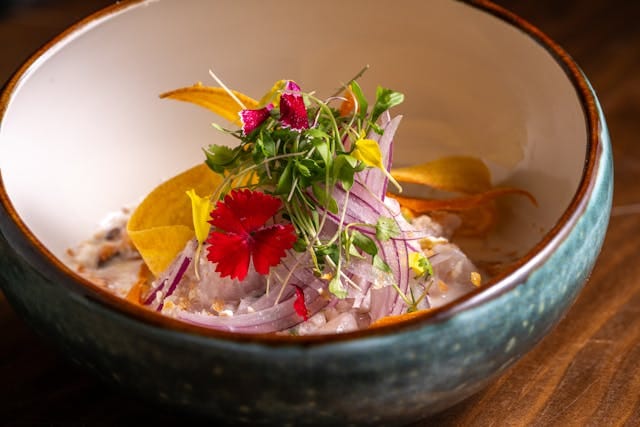
Ceviche is one of those dishes that feels almost magical. Fresh seafood, bright citrus, a touch of heat, and suddenly—without ever touching a stove—you have something that looks and tastes “cooked.”
But is it really?
There’s a common belief that soaking fish in lime or lemon juice actually cooks it. It’s a great story—but it’s not exactly true. Let’s unpack what’s really happening in your bowl of ceviche.
The Science Behind the “Cook”
When raw fish is submerged in citrus juice—whether from lime or lemon—the acid begins to denature the proteins in the fish.
That might sound technical, but the effect is easy to see:
- The fish turns from translucent to opaque
- The texture becomes firmer
- The flavor shifts from raw to something more delicate and savory
These changes mimic what happens when fish is exposed to heat. That’s why ceviche looks cooked.
But here’s the key distinction:
There’s no heat involved—just chemistry.
Why It Matters
Calling it “cooked” can be misleading, especially when it comes to food safety.
Heat cooking (grilling, baking, frying) doesn’t just change texture and flavor—it also kills harmful bacteria and parasites. Citrus juice, on the other hand, does not reliably do that.
So while ceviche may look like cooked seafood, it should still be treated with the same care as raw fish.
Is Ceviche Safe to Eat?
Yes—when prepared properly.
To enjoy ceviche safely:
- Use very fresh, high-quality seafood (often referred to as sushi-grade)
- Keep ingredients cold and properly stored
- Prepare it fresh and eat it soon after making it
People with compromised immune systems or certain health conditions should be especially cautious, as with any raw or lightly prepared seafood.
Lime vs. Lemon: Does One Work Better?
Both lime and lemon juice will denature proteins effectively, so from a scientific standpoint, either works.
The difference comes down to flavor:
- Lime juice brings a bold, sharp acidity—commonly used in Latin American ceviche
- Lemon juice offers a slightly softer, more floral citrus note
Choosing between them is less about chemistry and more about tradition and taste.
The Real Magic of Ceviche
Ceviche isn’t about cooking—it’s about transformation. It’s a dish where acid replaces heat, where timing matters, and where freshness is everything.
Understanding what’s really happening doesn’t take away from the magic—it enhances it. It reminds us that great food isn’t just about ingredients, but about the processes that bring them to life.
Final Thought
Lime or lemon juice doesn’t truly “cook” ceviche—but it does something just as fascinating. It reshapes the fish through chemistry, creating a dish that’s fresh, vibrant, and deeply rooted in culinary tradition.
And that’s something worth celebrating.